The Science Inside

A quiet rhythm you can hold.
Inside Monky, low-frequency sound becomes soft movement beneath the plush, a felt rhythm designed to help the body wind down.
One rhythm invites another.
Monky sets a slow, steady rhythm, and the body, drawn to follow, gradually settles into the same calm.
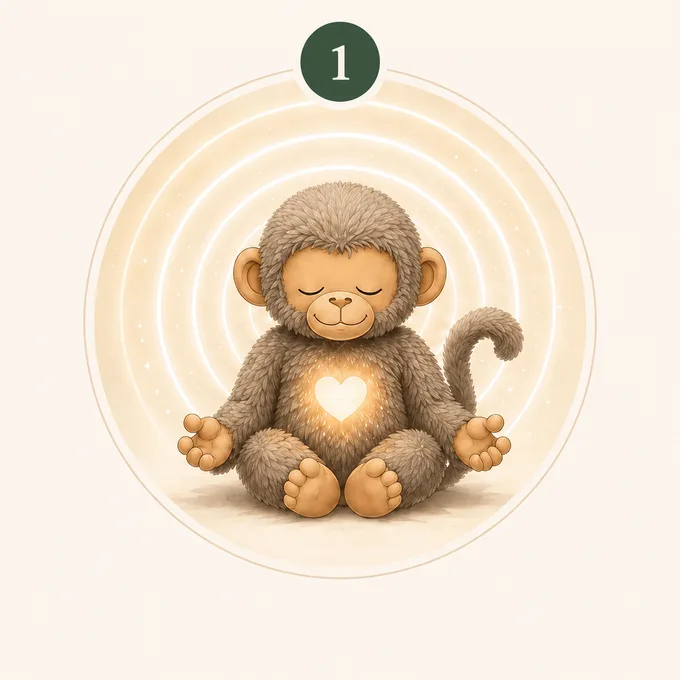
- Turn it on
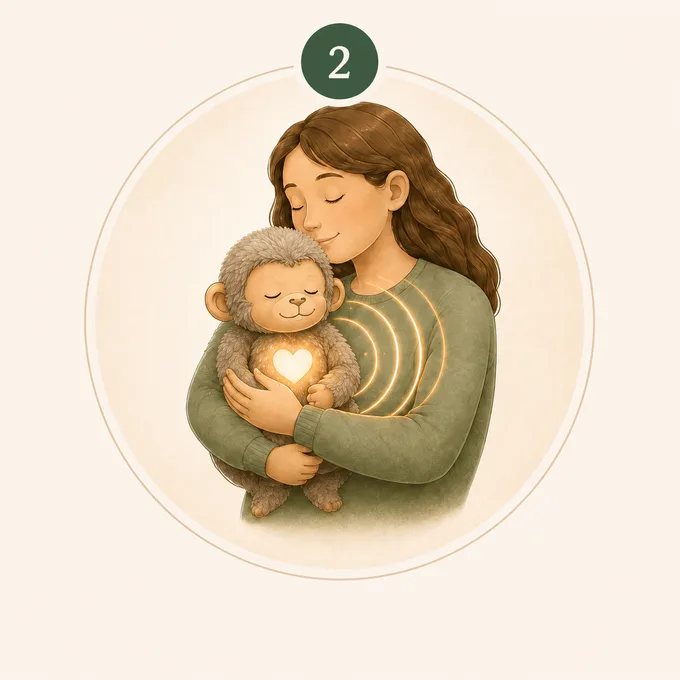
- Hold it close
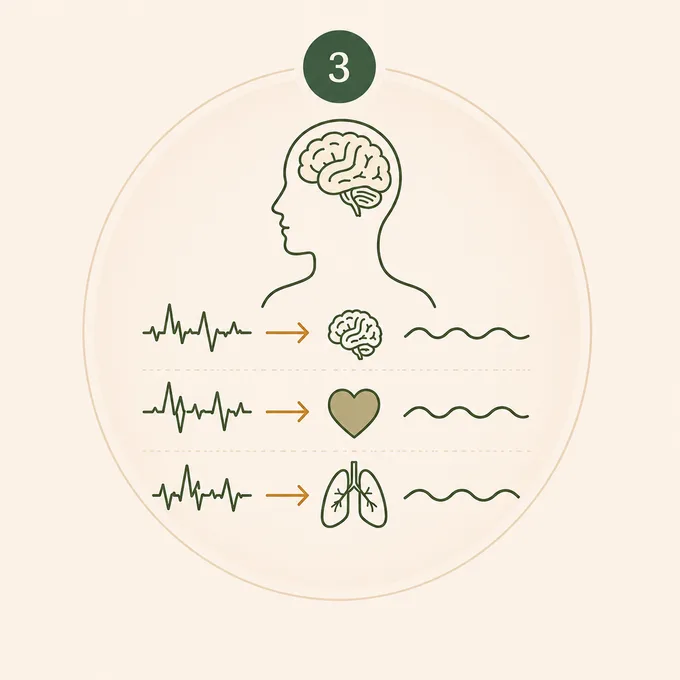
- Your body follows
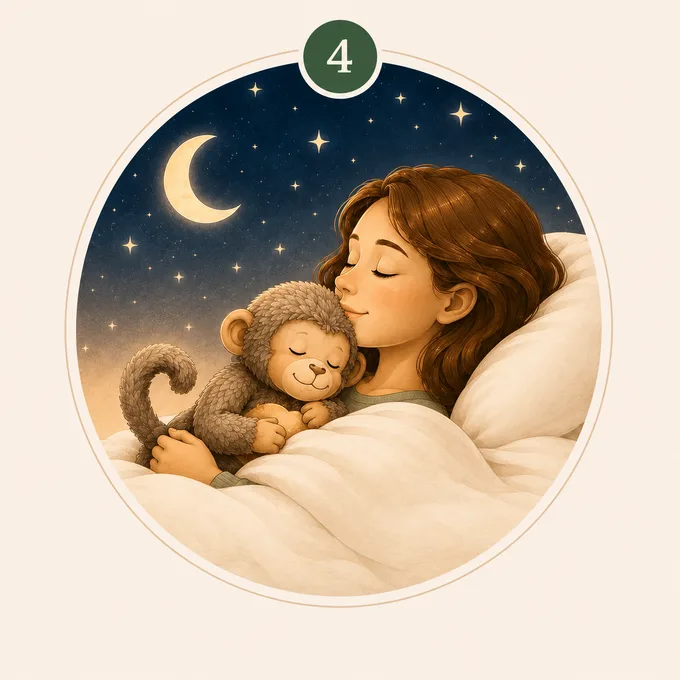
- Rest comes easier

Calm, by design.
Felt, not loud
The room stays quiet. The rhythm stays close.
Steady feels safe
A predictable cue gives the body less to react to.
Something to follow
Attention lands on the rhythm instead of the next thought.

Choose the rhythm for the moment.
Each mode is a steady rhythm you feel through the plush: slower to settle into rest, a little quicker for calm attention.
Relax
About 10 pulses a secondFor winding down. A light, even rhythm to let the day fall away.
Sleep
The slowest rhythmFor bedtime. A slow, smooth rhythm that gives a busy mind somewhere quiet to rest.
Focus
A brighter, steady pulseFor quiet attention. A steady pulse to hold your focus without adding noise.

Different ages. Same need for quiet.
A steady rhythm gives the body something simple and predictable to settle into, whether the day was filled with play or responsibility.
From playtime to bedtime.
A familiar vibration becomes part of the nightly routine, helping the body recognize that it is time to slow down.
From a busy mind to a quieter body.
When the day is over but the body is still carrying it, a steady vibration offers one simple sensation to settle around.

Promising research. Careful claims.
Low-frequency sound and vibration have been studied for relaxation, stress reduction, heart-rate variability, and sensory regulation. Monky draws from this research, but it is not a medical device, treatment, or guarantee of sleep.
View references
About Monky's rhythms
Monky's rhythms are slow, steady pulses chosen to feel calming. They are inspired by research on rhythmic sound, touch and relaxation. Monky itself has not been clinically tested yet, and we don't claim it changes brain activity. Monky is a wellness and relaxation product, not a medical device, and is not intended to diagnose or treat any condition.
References & sources
- Haynes, A. C., et al. (2022). A calming hug: Design and validation of a tactile aid to ease anxiety. PLoS One, 17(3), e0259838.
- Kantor, J., et al. (2022). Effect of low frequency sound vibration on acute stress response in university students: pilot randomized controlled trial. Frontiers in Psychology, 13, 980756.
- Fooks, C., & Niebuhr, O. (2024). Effects of vibroacoustic stimulation on psychological, physiological, and cognitive stress. Sensors, 24(18), 5924.
- Mindell, J. A., et al. (2009). A nightly bedtime routine: impact on sleep in young children and maternal mood. Sleep, 32(5), 599–606.